
By Dan Farrell, Co-founder and Director, Sparks Film School
When we first started Sparks Film School in 2010, the creative industries were already showing signs of explosive growth. Despite all the challenges of the decade so far, one thing is clear: the UK’s creative economy is not just thriving, it’s becoming essential infrastructure for our digital future.
Despite this boom, we’re facing a creative skills crisis that threatens to leave an entire generation behind.
The Numbers Don’t Lie: Creative Industries Are Leading Economic Growth
The UK’s creative industries now contribute over £116 billion annually to our economy, that’s more than agriculture, aerospace, and life sciences combined.
Film and television alone employ over 200,000 people, with production spending hitting record highs year after year. Netflix, Amazon, Disney, and Apple are all establishing major production hubs across the UK, creating thousands of jobs that simply didn’t exist when we started Sparks Film School.
But here’s the problem: while demand for creative talent skyrockets, our young people are increasingly unprepared for these opportunities. There is a distinct lack of relevant creative skills required for our digital world. Traditional education systems, brilliant as they are in many ways, simply weren’t designed for a world where every adult carries a high-capability camera in their pocket and where “content creator” is an increasingly legitimate – and highly lucrative – career path.

Beyond the Algorithm: The Digital Literacy Imperative
We’re raising the first generation of true digital natives, but being born into a digital world doesn’t automatically make you digitally literate, or provide you with the essential creative skills required to thrive in that environment. There’s a vast difference between consuming content and creating it thoughtfully, between going viral by accident and building a sustainable creative career.
In our 15 years of teaching film and media arts, I’ve watched thousands of young people transform from passive consumers into confident creators. But this transformation doesn’t happen by accident, it requires structured learning, professional guidance, and hands-on experience with real equipment and techniques that supports meaningful creative skills development over time.
The average young person will create more video content in their lifetime than previous generations ever watched. They’ll need to understand not just how to point and shoot, but how to craft compelling narratives, lead a team, share ideas, work collaboratively, solve technical problems, and think critically to analyse and question the media they both create and encounter.
Now more than ever we need our young people to be able to question messages they are shown. We need them to be able to recognise false messaging, challenge perspectives and questions the intent behind videos. These critical media skills aren’t just “nice to have” skills anymore, they’re fundamental literacies for the 21st century.
The Employability Revolution: Creative Skills as Core Competencies
Creative skills have become valuable across virtually every sector. Marketing teams need video producers. Tech companies need user experience storytellers. Healthcare organisations need communication specialists who can translate complex information into engaging content.
Our alumni aren’t just working in traditional film and TV roles (though many are) and we’re incredibly proud of their success. They’re becoming journalists, YouTube entrepreneurs, social media managers, documentary makers, and digital marketing specialists. Some have started their own production companies before they’ve even finished university.
What unites all these career paths is the need for practical, hands-on creative skills development that goes beyond theory. Employers consistently explain how they value candidates who can demonstrate real project experience, collaborative skills, and technical competency, exactly what quality film education should provide.
Not All Film Education is Created Equal
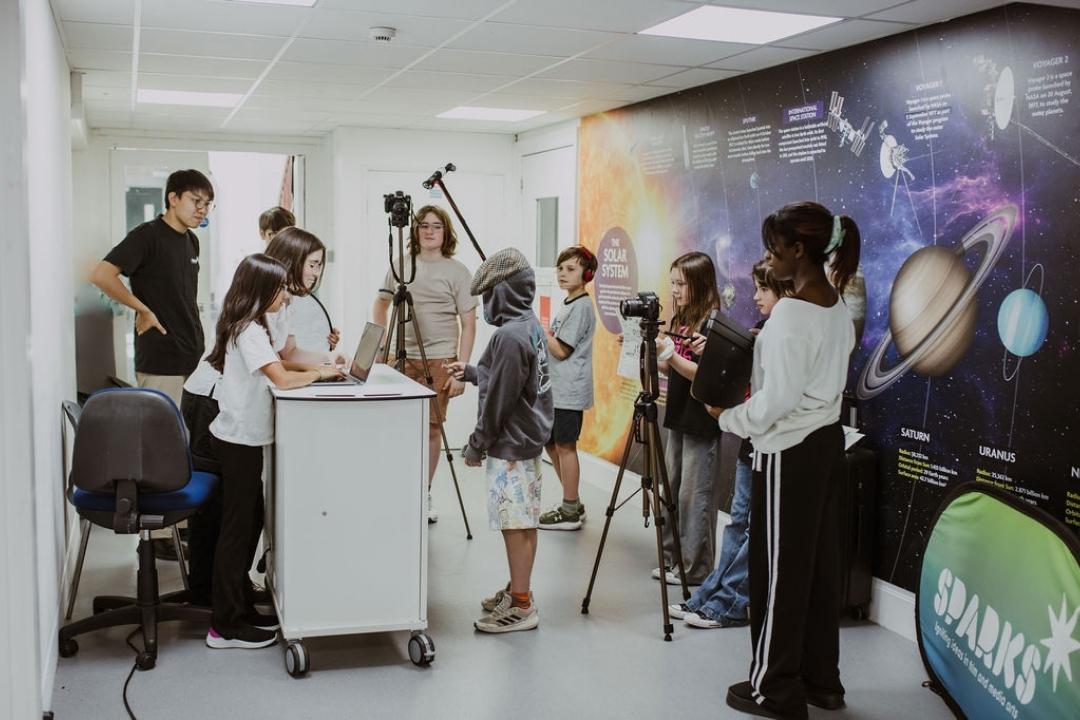
At Sparks Film School, our approach is to be fully hands-on. This week, I was asked “So, presumably they don’t touch the cameras on day one, as you’ll need to get them ready?” Not at all.
Hands-on, practical opportunity is one of our key values for teaching and learning creative skills at Sparks. All students, regardless of age (yes, even the 5 year olds), get their hands on the cameras as part of a meaningful activity within their very first workshop. We know that as people, we often learn best by doing, and in terms of developing real-world creative skills, this approach is absolutely essential. We passionately believe that filmmakers learn about filmmaking from the process of actually making films. Recently, I had the pleasure to catch up with a former Sparks Film School student, Ruby Ballantyne, who is now working as a DOP [Director of Photography].
Ruby told us,“When I got to University, so many other people hadn’t even touched a camera, whereas I knew about quite a lot, all the roles on set, and I could do a lot of things there because of the grounding I had from Sparks.”
For us, it’s that instant connection with making and the chance to learn through real filmmaking opportunities that makes all the difference. It means our students can be confident in their abilities and their knowledge. They are actively developing those vital creative skills, even from their first day. And that’s a world away from sitting in a classroom, listening to or writing about theory.
Looking Forward: The Infrastructure We Need
As we look toward the future, I believe society needs to fundamentally rethink how we approach creative education and creative skills development. Digital media literacy should be as fundamental as traditional literacy and numeracy. Every young person should leave school with basic video production skills, just as they should be able to write a coherent essay or solve a mathematical problem.
But we also need to preserve and expand access to high-quality, intensive education for those who want to pursue these creative skills more seriously. This means supporting specialised programmes, investing in proper equipment and facilities, and ensuring that cost doesn’t become a barrier to participation.
At Sparks we’ve worked with numerous charity and local organisation funders to make sustainable project work possible for disadvantaged communities. This is because we believe talent is distributed equally, but opportunity is not. As an industry, we need to do more to ensure that creative careers remain accessible to young people from all backgrounds.
The Time is Now
Emerging technologies like virtual production, AI-assisted editing, and immersive media are creating entirely new categories of creative work. The young people we teach today will inherit a creative economy that’s larger, more diverse, and more central to economic growth than ever before.
But they’ll only be prepared to seize these opportunities if we give them the education they deserve. Creative media education that is practical, professional, and purposeful creative learning that treats their potential with the seriousness it demands.
The question isn’t whether creative skills will be important for the next generation’s career prospects. The question is whether we’ll have the courage to invest in the quality education they need to succeed.
After 15 years of watching young minds ignite with creative possibility, I can tell you this: when we give young people the right tools, the right guidance, and the right opportunities, there’s no limit to what they can achieve.
The future belongs to the creators. Let’s make sure they’re ready for it.
Dan Farrell is co-founder and director of Sparks Film School, which has trained over 15,000 young filmmakers across 35 locations since 2010. He recently served as a jury member for A Film Teens Fest 2025 and regularly speaks about creative education and youth development.
Learn More
Find out more about the creative education opportunities available at Sparks Film School >>
