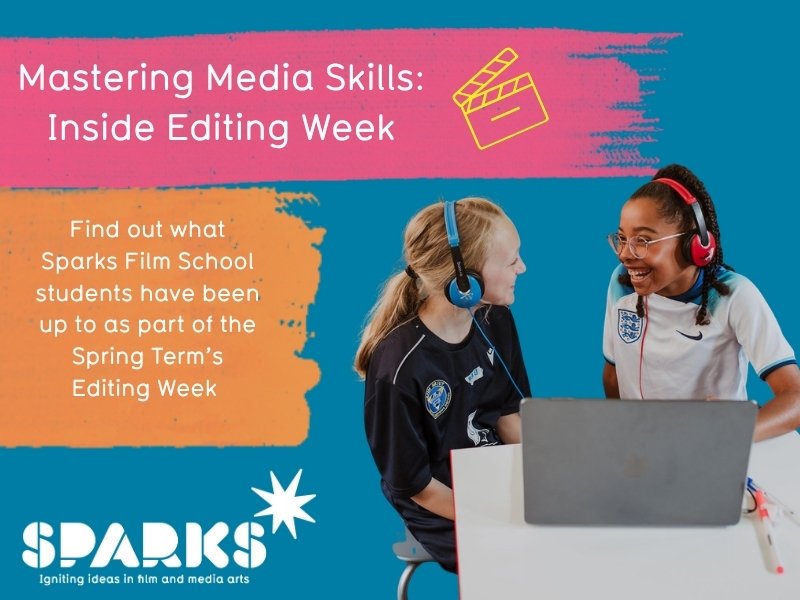

Behind the Scenes with Sparks Film School Students During Editing Week
We maintain that editing is one of the most important skills students learn in our filmmaking courses. Since we first started teaching filmmaking, editing has been a staple of our filmmaking curriculum.
While filming captures the raw footage, it’s the editing process that really shapes the final story. Editing is all about taking lots of possible moments or creative choices and piecing them together so that it becomes a work of art. It’s about structuring scenes, refining pacing, and transforming ideas into a polished, watchable film.
At Sparks Film School’s filmmaking classes, young filmmakers head into post-production phases and focus on editing (after a busy term of production) towards the end of each term. As part of this spring term’s theme Raising the Stakes, the editing focus has been on how tension, pacing, and specific storytelling choices can make films more engaging.
As students move into the final weeks of the spring term, they are applying these techniques in their own edits, going through a drafting process and peer evaluation, before settling on an edit and bringing their projects to life.

What Is Editing?
Video editing is the process of selecting, arranging, and refining video footage to create a cohesive story. Editors decide how scenes flow, how long shots last, and how the audience experiences the narrative.
In our filmmaking classes, Sparks Film School students are introduced to industry-standard softwares like Adobe Premiere Pro or Final Cut Pro, first learning how to cut and sequence clips they have previously filmed, adjust audio, and add transitions. These tools help bring structure and clarity to a project, turning the video footage into a finished film that makes sense (or perhaps deliberately doesn’t!) and tells a story.

Why Is Editing So Important?
The edit is where the story truly comes together. Even well-shot footage can feel confusing, slow or random without strong editing to pull everything into a narrative. Students learn how to control pacing, build tension, and guide their audience’s emotions.
As part of this term’s Raising the Stakes theme, students have been exploring techniques that heighten tension and an audience’s reaction to story beats and reveals. One key technique the crews have been experimenting with this term has been cross-cutting, which is where a sequence cuts back and forth between two or more scenes to tell the audience that either events are happening at the same time, or there is a symbolic link between the two scenes.
This allows filmmakers to carefully control what is revealed to the audience and when, building suspense and anticipation. By experimenting with the pace, by holding on certain shots or cutting more rapidly, students learn how to shape the emotional intensity of a scene.
This term students looked to famous directors such as Hitchcock for inspiration on how to add different pace dynamics and amp up the drama. These skills help them understand how editing can completely transform the impact of a story, as well as how to add style to their productions.

Key Skills Students Learn During Editing Week
1. Storytelling
Editing teaches students how to structure a narrative clearly and effectively. Through this term’s work, students have focused on how to ‘raise the stakes’ within a story by controlling what the audience knows and when.
2. Attention to Detail
Small decisions, like when to cut or how long to hold a shot, can significantly impact tension and clarity. Students develop a strong eye for detail through hands-on editing practice.
3. Problem-Solving
Not everything goes perfectly during filming. Editing allows students to fix issues, restructure scenes, and strengthen their story.
4. Technical Skills
Using editing software builds digital and technical confidence. These are valuable skills not just in film, but across many creative industries.
5. Collaboration
Editors often work closely with directors and other team members. Students learn how to take feedback and refine their work as part of a team.

Editing is a vital part of the process within Sparks Film School’s filmmaking courses and Editing Week combines creativity, technical skill, and storytelling into one really fun week full of practical learning.
As they complete their final edits over the coming weeks, the young filmmakers are not only improving their films but also gaining skills that will support them throughout their creative journey.
Ready to see your ideas on the big screen?
Whether you are a future director or a producer in the making, learning to edit is a great next step.
Interested to join? Sparks Film School offer weekly filmmaking classes where members pitch, direct, shoot, crew and edit their own short films.
Find your nearest film school and register for a Free Trial Class here.
